Organizational change rarely fails because leaders choose the wrong strategy. More often, it fails because organizations mistake discomfort for failure. Every meaningful transformation creates resistance before it creates results. Ironically, I learned one of the best lessons about leading change while sitting in my orthodontist’s chair.
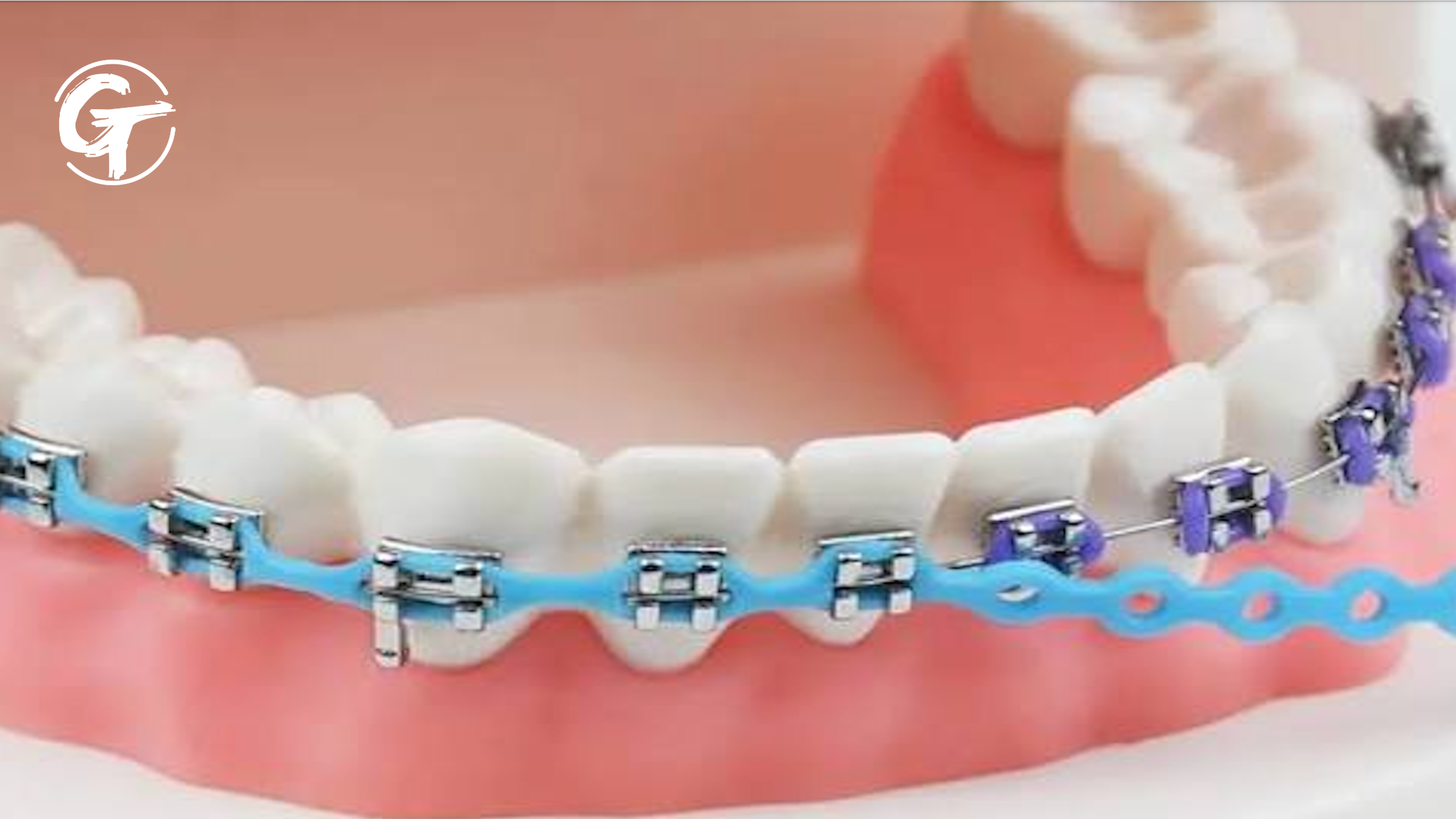
Eight months into braces, I thought I knew what discomfort felt like. Then last week my orthodontist’s assistant added a power chain across the top, eight or nine teeth deep, to close a gap between two of them. I watched her stretch that little elastic band tooth by tooth by tooth, and by the time she got to the last one, I was gripping the armrest.
That was two days ago. My teeth are still sore to the touch. Sore when I eat. Sore in a low, background-hum kind of way that doesn’t really go away; it just fades into the rest of my day until I bite into something and remember it’s there.
Here’s the thing that got me thinking, though, lying in that chair with my jaw aching: this is exactly what real change feels like in an organization. And most leaders bail the second it starts to hurt.
Organizations Move As Systems (One Tooth Doesn’t Move Alone)
Before the power chain, I had individual ties on my brackets. Each one doing its own small job. But two teeth had a gap between them that wasn’t closing, no matter how long we waited. So my orthodontist did something different. Instead of working on those two teeth in isolation, she ran one continuous chain across nearly every tooth on top. The whole arch. Because the only way to move two stubborn teeth is to put the entire system under connected pressure.
I see this constantly in my work. A leader has one team that isn’t performing, one department that’s stuck, one person who won’t get on board. So the instinct is to isolate it. Fix that one tooth. Send that manager to a training. Have a hard conversation with that one director. And it doesn’t work, because the tooth isn’t the problem. The tooth is stuck because everything around it is holding it in place.
You don’t close a gap by pulling on the gap. You close it by putting the whole system under the same pressure at the same time.
Discomfort Doesn’t Mean Failure
I keep catching myself wanting to baby my mouth this week. Eating on the side that doesn’t hurt as much. Avoiding anything crunchy. And I have to remind myself: this soreness is the treatment working, not the treatment failing.
This is where I think leaders get it backwards more than anywhere else. The moment people start pushing back, the moment a team gets uncomfortable, the moment someone says “this doesn’t feel right,” leadership reads that as a signal to ease off. To slow the rollout. To soften the message. To wait for a better time.
But resistance and soreness are the same thing. They’re evidence that pressure is being applied and something is actually shifting. If nothing hurt, nothing would be moving. I’m not saying discomfort should be the goal. I’m saying it shouldn’t be mistaken for a red flag every time it shows up. Sometimes it’s just what change feels like on its way to working.
Consistency Creates Alignment
The reason a power chain works and a single tie doesn’t is continuity. It’s one connected band pulling everything together at once, not nine separate efforts that all happen to be aimed in a similar direction. If that chain snapped tonight, or if my orthodontist only tightened half of it, the force would stop transferring evenly. Some teeth would keep moving. Others would just sit there.
That’s what happens when one leader on an executive team doesn’t actually buy into the change everyone else is being asked to make. It’s what happens when the new expectations apply to the frontline but somehow not to the VP who’s been doing it his way for fifteen years. The chain is only as strong as its weakest connection point, and everybody on the team can feel exactly where that weak point is, even if nobody says it out loud.
I can’t take this power chain off when it starts to bother me at dinner. That’s the whole point of it. It stays on, applying the same pressure whether I’m comfortable or not, because the two teeth it’s trying to move aren’t going anywhere on a schedule that’s convenient for me.
Most change efforts fail not because the strategy was wrong, but because somebody decided the discomfort was optional. It never is. Not for the teeth, and not for the org chart.
The Power Chain Principle
Organizations don’t change because one employee changes. They change when:
- Leaders communicate consistently
- Expectations remain consistent
- Accountability remains consistent
- Feedback flows both directions
- Every department experiences the same pressure toward the same goal
That’s what creates organizational alignment.
Leading Change Without Losing Trust
A power chain doesn’t just muscle teeth into place. It works because three things happen at once: one clear line of pressure, applied evenly over time. Take any one of those away, and you don’t get alignment; you get a mess. The same is true for leading change. Here’s what that looks like off the orthodontist’s chair.
-
Name one direction, and keep saying it
My orthodontist didn’t leave me guessing about what this chain was for. Close the gap between those two teeth. One outcome, stated plainly, repeated at every visit.
Most change efforts don’t fail because the vision was bad. They fail because leaders say it once in a town hall and assume it’s landed. It hasn’t. Say the outcome in plain language. Say it again next week. Then connect it to what each team is actually doing day to day, so people aren’t left to guess how their work ladders up to it. Clarity isn’t a slide; it’s a repetition.
-
Keep the pressure steady, not sporadic
The chain on my teeth doesn’t ease up because I had a rough day. It’s not tighter on Mondays and looser by Friday. That consistency is the entire mechanism. Uneven pressure doesn’t just slow things down; it can pull a tooth in the wrong direction.
I see leaders do the equivalent all the time. One tough accountability conversation, followed by three months of silence. A new expectation announced with urgency, then quietly not enforced the first time someone pushes back. That inconsistency is what turns change into “optional” in people’s minds. If the expectation is real, it has to hold steady across the whole leadership team, not just the one manager willing to have the hard conversation.
-
Let the pressure travel in both directions
Here’s what a power chain can’t do that a good leader has to: it can’t tell my orthodontist when something’s actually wrong versus just sore. I have to say something if the pain isn’t normal soreness, if it’s something else. She’s relying on me to report back so she can adjust before it becomes a real problem.
Leaders who only push direction downward are flying blind. You need people telling you where the friction actually is, early, before it turns into disengagement or a resignation letter. That means building real channels for people to say “this isn’t working the way you think it is” and actually adjusting when they do. Clarity going down. Honesty coming back up. Both directions have to stay open, or you won’t know the system’s drifting until it already has.
None of these three things work in isolation, same as the chain itself. Direction without consistency is just a mission statement nobody trusts. Consistency without honest feedback turns into stubbornness dressed up as discipline. You need all three moving together, or the whole thing stalls out exactly like an isolated tooth would.
The Gap Doesn’t Close Overnight
In a few weeks, that gap between my two front teeth is going to be gone, and honestly, I probably won’t even remember exactly how sore this week was. That’s usually how it goes with real change too. You forget the ache once you’re standing on the other side of it, and all you can see is the outcome.
But you don’t get to the other side by protecting people, or yourself, from the pressure. You get there by trusting the process enough to stay in the discomfort until the gap actually closes.
My mouth is sore right now. My teeth are moving. Both things are true at the same time, and honestly, that’s the whole lesson.
Is Your Organization Stuck?
If your team is struggling with change, communication, or alignment, the issue may not be the “problem employee” everyone is focused on. More often, it’s the system surrounding them.
I help executive teams build trust, improve communication, and lead organizational change through keynotes, leadership retreats, and consulting that create lasting behavior change, not just temporary motivation.
Let’s talk about how to move your entire organization forward.
→ Schedule a conversation at gina@ginatrimarco.com