
Every once in a while, someone takes something you’ve been teaching for years and helps you see it through an entirely different lens.
That’s what happened when Brice Thomas, one of our trainers at Carolina Improv Company and also a preacher, shared a sermon he wrote called The “Yes, And…” Gospel.
With Brice’s permission, I’m sharing his sermon here in its original form. Whether you’re a person of faith or simply someone trying to navigate a world that increasingly demands we choose sides, I think you’ll find something worth reflecting on.
The “Yes, And…” Gospel
By Brice Thomas
Originally written as a sermon for October 18, 2026
Matthew 22:15–22
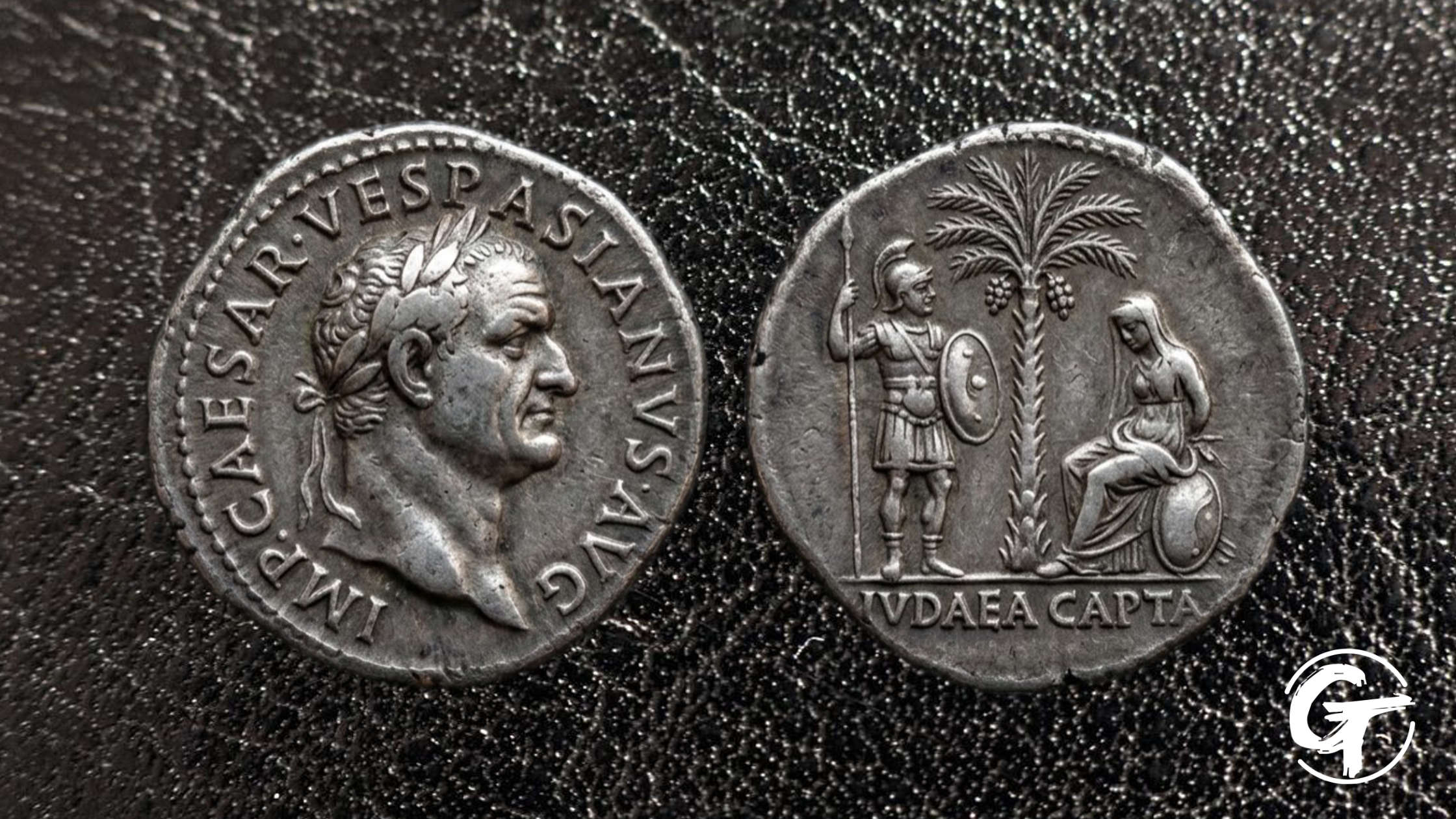
That’s when the Pharisees plotted a way to trap him into saying something damaging. They sent their disciples, with a few of Herod’s followers mixed in, to ask, “Teacher, we know you have integrity, teach the way of God accurately, are indifferent to popular opinion, and don’t pander to your students. So tell us honestly: Is it right to pay taxes to Caesar or not?” Jesus knew they were up to no good. He said, “Why are you playing these games with me? Why are you trying to trap me? Do you have a coin? Let me see it.” They handed him a silver piece. “This engraving—who does it look like? And whose name is on it?” They said, “Caesar.” “Then give Caesar what is his, and give God what is his.” The Pharisees were speechless. They went off shaking their heads.”
“Gotcha!” They thought they had him. The Pharisees and the Followers of Herod came to Jesus with what sounded like a perfectly reasonable question: “Is it lawful to pay taxes to the emperor, or not?” Yes or no, Jesus? Choose. But it wasn’t really a question. It was a trap.
One of the interesting elements to this story is that those who came to entrap Jesus were strange allies indeed. Normally, the Pharisees and the Herodians would have absolutely nothing to do with each other and certainly had nothing in common. The Pharisees were purists and separatists who disliked paying the Roman tax but did so reluctantly. The Herodians were wealthy and influential followers of King Herod and had no problem paying the tax. These taxes, in fact, were helping to keep the Herod dynasty in power.
Under ordinary circumstances, these two groups wouldn’t have agreed on much. But they could agree on one thing. Jesus was becoming a problem. So they constructed a question with only two possible answers. If Jesus says, “Yes, pay the tax,” he risks enraging those who opposed Roman occupation. If he says, “No, don’t pay it,” then he could be accused of rebellion against Rome.
Either way, they’ve got him. Or so they think. Because Jesus refuses to accept the world they have constructed for him. “Show me the coin used for the tax,” he says. Someone pulls out a denarius. Jesus looks at it. “Whose image is this?” “Caesar’s.” And then Jesus says: “Give therefore to Caesar the things that are Caesar’s, and give to God the things that are God’s.” And suddenly their ultimatum is cracked open. They gave Jesus two choices. But He created another possibility.
Anyone who has ever done improvisational theater might recognize what just happened. We call it: “Yes, and.” One of the foundational principles of improv is that when another player gives you something in a scene, you accept the reality they’ve created and then add something to it. “Yes, and.” Suppose I’m onstage and another player says: “Dad, I can’t believe you brought a llama to my wedding.” And I say: “That’s not a llama.” Well, the scene is over. I’ve just denied the reality my scene partner offered, as crazy as it might be. But suppose I say: “Yes, and this llama is your wedding present!” Now we’ve got a scene to create. Because “Yes, and” doesn’t merely agree. It creates possibility.
And I wonder whether something like that is happening in this encounter with Jesus. His opponents ask him to choose: “Caesar or God?” Jesus says: Yes, Caesar’s image is on the coin. Yes, Caesar demands you pay your taxes. Yes, this is the law of the land. And…“Give to God the things that are God’s.”
Suddenly the scene gets much bigger. Because Jesus never tells them exactly what belongs to God. Maybe he doesn’t need to. Every Jewish person standing there would have known the words from Genesis: “God created humankind in God’s image.” Caesar’s image is stamped on the coin. But Jesus affirms that God’s image is stamped on you. Give Caesar his coin. And give God yourself. The question began with taxation. Jesus turned it into a question of identity. They wanted to know: “Which side will you choose?” Jesus seems more interested in affirming that “God has chosen you.”
Many of us are quite familiar with either/or questions. Our world loves them. Are you conservative or liberal? Traditional or progressive? Believer or unbeliever? Right or wrong? Successful or unsuccessful? Rich or poor? Are you with us or against us? Choose. And certainly there are moments when we must choose. There are injustices we must oppose and convictions for which we must stand. But sometimes the choice itself is the trap. Sometimes we become so convinced there are only two possibilities that we stop imagining what God could create beyond them.
Jesus flips this script throughout the Gospels. In John 9, the disciples ask: “Who sinned, this man or his parents, that he was born blind?” Which one, Jesus? Jesus says neither. “This man is blind so that God’s glory may be revealed.” In Luke 10, a lawyer asks Jesus what one must do to get eternal life. Jesus says to love your neighbor as yourself. “Who is my neighbor?” the lawyer asks. So Jesus tells a story in which the despised outsider, the Samaritan, is actually the good neighbor. The one option that the strict religious would never choose. You see, people kept trying to box Jesus in, and he kept breaking those boxes open. Yes, and. Maybe Yes, and is more than an improv technique. Maybe it’s also a spiritual practice.
My improv coach and mentor, Gina Trimarco Klauder, wrote in her book, The New Choice Effect, that “at its core, improv teaches us the principles of staying open, listening deeply, and responding without judgment.” Like her, improv has helped me navigate my faith and learn to accept others, no matter how much our beliefs may differ. Over the years, many people have jokingly referred to her improv theater as “The Church of Improv.” She writes that, “At first, I thought that was weird, but honestly, it fits. Our space has always drawn people from all walks of life: extreme liberals and staunch conservatives, Christians and atheists, people in their 20s and people in their 70s. My improv theater is one of the only places I’ve ever witnessed such radically different people come together and truly accept one another, because the culture is grounded in the ‘Yes, And’ principle: acceptance without judgment.”
Jesus, in a way, was probably one of the most prolific improvisers. He encourages us to keep asking questions and stay curious. Keep expanding our search for truth and belonging, and stay open to what God wants to reveal. My coach Gina puts it:
“Improv invites you to sit beside someone else’s truth without needing to rearrange the furniture. The improv mindset has rewired how I see the world. Following these principles is a practice of grace, and in many ways, it mirrors the foundation of my faith. Our Christian faith teaches that Christ accepts all sinners, regardless of what they’ve done or what they believe. Improv reminds me to drop the judgment and stay human.”
Yet the binary choices that imprison us aren’t only political or theological. They are deeply personal. Someone hurts me. Either I forgive them and pretend it never happened, or I remain angry forever. Jesus’ “Yes, And…” philosophy teaches us that we don’t have to choose either or. There is often a third way. Yes, I can forgive you, AND I can have boundaries.
A relationship ends. Either it was a failure, or I have to get it back somehow. But perhaps: Yes, something beautiful existed between us, AND it may be time to let that love take another form.
I experience doubt. Either I have faith or I don’t. But perhaps: Yes, I believe, AND I have questions.
I am afraid. Either I’m courageous or I’m a coward. But perhaps: Yes, I am afraid, AND I can still take the next step.
I am grieving. Either I’m healing or I’m still broken. But perhaps: Yes, I still grieve, AND joy can still live within me.
“Yes, and” doesn’t erase what came before it. That’s important. This isn’t positive thinking dressed up in religious language. “Yes, and” doesn’t mean tolerating injustice. It doesn’t mean staying in an abusive relationship. It doesn’t mean pretending everything happens for a reason. It doesn’t mean smiling when your heart is breaking.
Actually, “Yes, and” begins with something much harder. It begins by telling the truth. Yes. This happened. Yes. This hurts. Yes. This relationship changed. Yes. I failed. Yes. I am frightened. Yes. This isn’t the life I thought I would have. Faith doesn’t require us to deny the reality we’re actually standing in. It asks whether that scene is the end of the story. And perhaps that’s why improv offers such an interesting metaphor for faith. Maybe faith isn’t knowing how the scene ends. Maybe faith is trusting that God is still present in the scene. Not controlling every moment. Not scripting every tragedy. But present. Creating. Inviting. Opening possibilities we cannot yet see.
Jesus’ opponents came carrying a coin and demanding that he choose between two answers. Jesus handed them back a much bigger world. Yes, this coin bears Caesar’s image. AND you bear God’s. Yes, this is the world as it is. AND God’s kingdom is still emerging within it. Yes, there are things we cannot change. AND there are possibilities we have not yet imagined. Yes, some chapters end. AND the story continues. Yes, sometimes our hearts break. AND they can remain open. Yes, there is a cross. AND there is resurrection.
Maybe that’s how faith is supposed to work within us. Not knowing exactly where life is headed AND still willing to take the journey. Not pretending that everything is going our way AND still looking for possibilities. Not denying what hurts AND still seeking healing. AND trusting that no matter what appears next, God is still there, inviting us to receive what is true AND imagine what might yet become.
When those binary choices, those either/or traps, seem to box you in: Take a breath, AND…look again. Listen again. Imagine again. Improvise what could be next. Because somewhere beyond either/or, God is still creating. The scene isn’t finished. The story isn’t over. And perhaps God is whispering the words that keep possibility alive:
Yes…
and…
Amen.